
Singapore’s property market is entering an interesting new phase, and according to CBRE, the city’s office sector could soon be on the cusp of a bull run. This anticipated upswing isn’t just good news for corporate landlords and commercial investors. It’s also creating ripple effects across other asset classes, particularly in the growing food estate and industrial property segments.
Market analysts have been watching Singapore’s office sector closely over the past year. Despite a challenging global environment, the city-state has shown remarkable resilience. A steady flow of foreign investment, robust business confidence, and an expanding services economy have supported a gradual recovery in office demand. CBRE’s latest outlook suggests that this demand could accelerate, ushering in a bullish cycle for prime and Grade A office spaces.
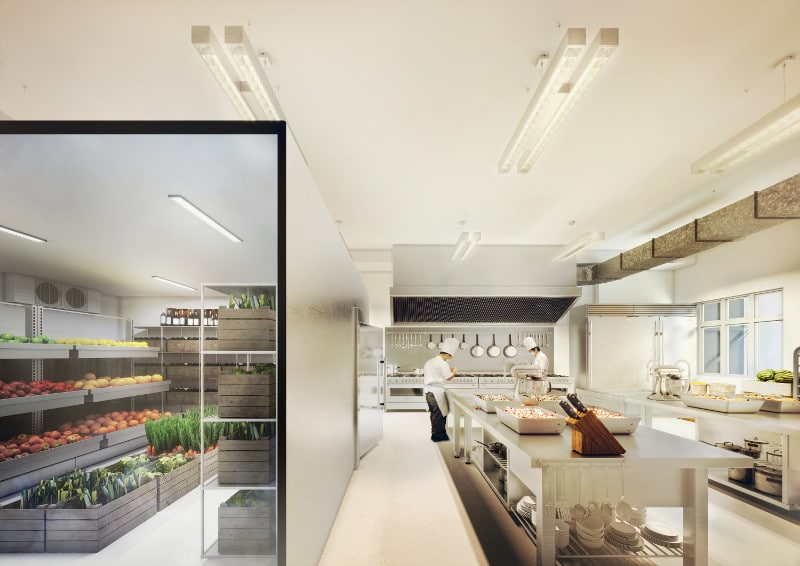
But what makes this story more interesting is how this potential bull run is influencing investment sentiment beyond traditional office towers. As businesses expand, their operational needs naturally extend into logistics, food production, distribution, and support services. That is where food estates—specialized industrial spaces designed for food manufacturing and processing—enter the picture.
When office demand grows, it typically signals that businesses are hiring, expanding, and moving more activity into Singapore. Many of these businesses belong to sectors such as hospitality, retail, and F&B, which have close links to food processing and distribution networks. The increased corporate activity creates a need for better and more efficient supply chain infrastructure. This is driving investors to look at food estate properties as complementary assets that can benefit from the same economic upswing.
Singapore has long positioned itself as a hub for food innovation and security. Its strategic initiatives to build modern, sustainable food production hubs are part of a broader plan to strengthen economic resilience. When paired with an office market on the rise, this creates a compelling investment landscape. Investors who traditionally focused on commercial assets are beginning to diversify into well-located food estate projects to capture a wider share of the growth cycle.
CBRE’s analysts have pointed out that rising office rents often lead to increased demand for ancillary spaces that support business functions. For example, food and beverage companies expanding their headquarters in the city often need additional facilities for processing, storage, and packaging. Industrial spaces designed as food estates offer precisely this kind of support. As a result, while office towers may be the headline story, the supporting infrastructure quietly becomes an attractive asset class in its own right.
Another factor driving confidence is Singapore’s transparent regulatory environment and long-term economic planning. Developers are responding to both corporate expansion and government initiatives by building new food production and logistics clusters. These modern estates are often located strategically near transportation routes, ports, and business districts, making them ideal for companies that need to balance efficiency with proximity.
The outlook also reflects shifting investor behavior. Traditionally, investors might have concentrated on Grade A offices in the central business district to capture returns from rent growth. Today, many are taking a more diversified approach—pairing office investments with industrial assets tied to essential services. This balanced strategy not only spreads risk but also positions portfolios to benefit from broader economic cycles. Food estates, with their stable tenant base and growing relevance in supply chains, fit naturally into this approach.
It’s also worth noting that Singapore’s strong positioning as a regional headquarters hub means the bull run in offices may be longer and more sustained than in other markets. This, in turn, gives investors more confidence to commit to supporting asset classes like food estates. As demand for office space picks up, these estates stand to gain from increased throughput, stronger lease stability, and higher asset values.
In the coming months, if CBRE’s forecast holds true, the office market could become one of Singapore’s strongest-performing property sectors. But the real winners may be those who look beyond the immediate headlines and position themselves in complementary areas like food estates.
As Singapore continues to align commercial expansion with strategic industrial growth, investors have a rare opportunity to benefit from two reinforcing trends. A bull run in office properties often marks the beginning of a broader economic surge. And for those paying attention, food estate developments may be one of the most promising ways to ride that wave.